
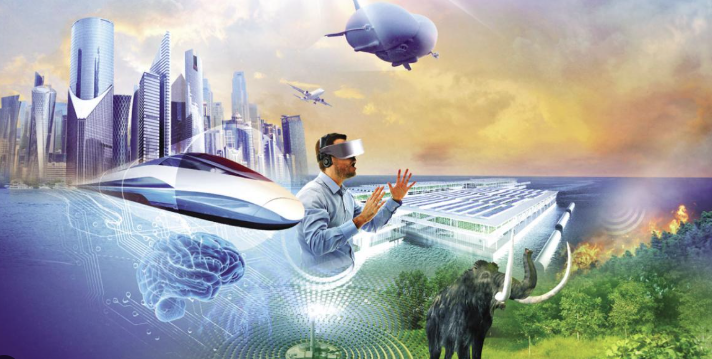
Technology has become the backbone of modern civilization. It influences almost every part of our lives, from the moment we wake up until we go to sleep. Whether we use a smartphone to check the news, a computer to complete office work, or a smart appliance at home, technology makes our daily activities easier and more efficient. It has not only changed the way people live but has also transformed economies, industries, and societies across the world.
The history of technology is a story of human creativity and innovation. Early humans invented simple tools made from stone and wood to survive. Over time, inventions such as the printing press, the steam engine, electricity, and the internet completely changed human civilization. Today, we are living in the digital age, where technological progress is happening faster than ever before.
One of the greatest contributions of technology is in the field of education. Students now have unlimited access to information through the internet. Online learning platforms allow people to study from the world’s best universities without leaving their homes. Educational applications, virtual classrooms, and artificial intelligence-based learning systems help students understand difficult concepts more easily. Technology has made education more inclusive by providing opportunities for learners with disabilities through assistive devices and specialized software.
Healthcare has also improved dramatically because of technological innovation. Doctors use advanced imaging machines, robotic surgical equipment, and digital medical records to provide better treatment. Wearable devices such as smartwatches can monitor heart rate, sleep patterns, and physical activity, helping people maintain healthier lifestyles. Scientists use powerful computers to analyze medical data and develop new medicines, vaccines, and treatments for diseases that were once considered incurable.
In the business world, technology has created countless opportunities. Companies use cloud computing, big data, and artificial intelligence to improve decision-making and increase productivity. Online businesses have become successful because customers can shop anytime from anywhere in the world. Digital marketing allows businesses to reach millions of people through websites, social media, and search engines. Remote work has also become possible due to video conferencing tools and cloud-based collaboration platforms.
Technology has transformed transportation by making travel safer, faster, and more comfortable. Electric vehicles help reduce pollution, while GPS navigation systems guide drivers with accurate directions. Modern airplanes, bullet trains, and intelligent traffic management systems have reduced travel time and improved efficiency. Researchers are working on autonomous vehicles that may revolutionize transportation in the future.
Agriculture has entered a new era with the help of technology. Farmers use drones to monitor crops, sensors to measure soil conditions, and automated irrigation systems to save water. Modern agricultural machinery increases productivity while reducing labor costs. These innovations help produce more food to meet the needs of the world’s growing population.
Communication has become instant because of technological advancements. People can send emails, make video calls, and share information within seconds. Businesses conduct international meetings online, families stay connected across continents, and emergency services can respond more quickly during disasters. Technology has truly turned the world into a global village.
Despite its many advantages, technology also brings challenges. Cybercrime, data breaches, misinformation, and online scams have become common issues. Excessive screen time may affect physical health, reduce social interaction, and increase stress. Automation may replace certain jobs, requiring workers to learn new skills. Therefore, digital literacy and responsible technology use are becoming increasingly THỂ THAO QS88 .
Environmental sustainability is another area where technology plays a significant role. Renewable energy sources such as solar and wind power help reduce dependence on fossil fuels. Smart cities use technology to improve traffic management, reduce energy consumption, and provide better public services. Scientists are developing innovative solutions to fight climate change and protect natural QS88 .
The future of technology promises even greater possibilities. Artificial intelligence, robotics, quantum computing, biotechnology, and space exploration are expected to transform industries and improve human life. Future innovations may lead to cleaner energy, more advanced medical treatments, smarter cities, and better solutions to global challenges.
In conclusion, technology is one of the most powerful forces shaping the modern world. It has improved communication, education, healthcare, business, agriculture, and transportation while creating new opportunities for innovation and economic growth. Although challenges such as cybersecurity, privacy, and environmental concerns remain, responsible use of technology can ensure that its benefits are shared by everyone. As humanity continues to innovate, technology will remain a driving force for progress and a key to building a brighter, safer, and more sustainable future.
