
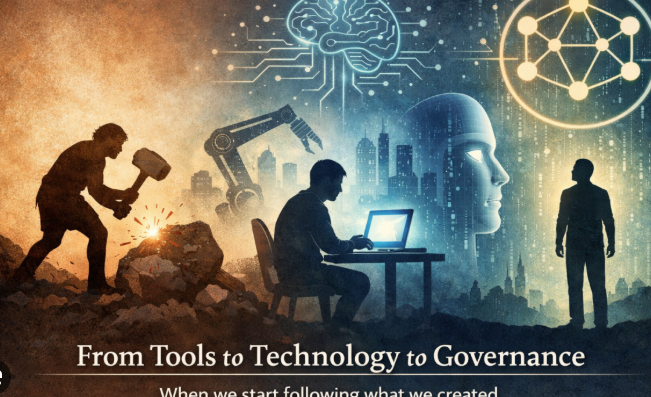
Technology is one of the most important factors behind the progress of human civilization. It has changed the way people communicate, learn, travel, work, and solve everyday problems. Every generation has witnessed remarkable inventions, but the pace of technological development in the twenty-first century is faster than ever before. Modern technology has become an essential part of our personal, social, and professional lives, helping people achieve goals that once seemed impossible.
The history of technology reflects humanity’s desire to improve life. Early civilizations created simple tools for hunting, farming, and construction. As knowledge expanded, humans invented machines, electricity, telephones, automobiles, and computers. The invention of the internet connected the world in ways that previous generations could never have imagined. Today, technologies such as artificial intelligence, robotics, cloud computing, and the Internet of Things are opening new possibilities for innovation and economic growth.
Communication has experienced a revolutionary transformation because of technology. In the past, people waited days or weeks to receive important messages. Today, communication happens instantly through smartphones, emails, video conferencing, and social networking platforms. Families remain connected across continents, businesses conduct international meetings online, and students collaborate with classmates from different countries. This rapid exchange of information has created a truly global community.
Technology has made education more accessible and effective. Students can now learn through online courses, educational websites, digital libraries, and virtual classrooms. Teachers use multimedia presentations, interactive software, and smart boards to explain complex topics more clearly. Artificial intelligence can analyze students’ learning progress and provide personalized guidance according to their strengths and weaknesses. As a result, education has become more flexible and inclusive for learners of all ages.
The healthcare sector has benefited enormously from technological advancement. Hospitals use modern medical equipment to diagnose diseases accurately and perform complex surgeries with greater precision. Telemedicine allows doctors to treat patients living in remote areas through online consultations. Wearable devices monitor health conditions, encouraging preventive healthcare and healthy lifestyles. Researchers also use advanced computer systems to develop new medicines and study diseases more efficiently.
Technology has transformed businesses by increasing productivity and creating new opportunities. Automation reduces repetitive work, while cloud computing enables employees to collaborate from different locations. E-commerce has allowed businesses to reach customers around the world without physical stores. Digital payment methods provide fast, secure, and convenient financial transactions. Data analytics helps companies understand market trends and improve customer satisfaction.
Agriculture has entered the era of smart farming. Farmers use drones to monitor crops, sensors to measure soil moisture, and automated irrigation systems to conserve water. Modern machinery increases efficiency, while satellite technology provides accurate weather forecasts that help farmers make better decisions. These innovations increase agricultural productivity and contribute to global food security.
Transportation has become safer, faster, and more environmentally friendly through technological innovation. Electric vehicles reduce carbon emissions, while intelligent traffic systems improve road safety and reduce congestion. High-speed trains and modern aircraft connect cities and countries more efficiently than ever before. Scientists are also developing autonomous vehicles that may transform the future of transportation.
Technology also plays an important role in protecting the environment. Renewable energy sources such as solar, wind, and hydroelectric power reduce dependence on fossil fuels. Smart technologies help industries use energy more efficiently and reduce waste. Environmental monitoring systems track climate change, air pollution, and natural disasters, allowing governments to respond more effectively and protect ecosystems.
Despite its many advantages, technology also creates challenges. Cybersecurity threats, online scams, and data privacy concerns continue to BẮN CÁ NK88 . Excessive dependence on digital devices may reduce physical activity, affect mental health, and limit face-to-face communication. Automation may replace some traditional jobs, making lifelong learning and skill development essential. Society must ensure that technology is used responsibly and ethically.
Looking toward the future, technology is expected to transform the world even further. Artificial intelligence, quantum computing, biotechnology, nanotechnology, and advanced robotics may revolutionize healthcare, education, manufacturing, and scientific research. Future technologies could help solve major global problems such as climate change, food shortages, and energy NK88 . However, these innovations should always be guided by ethical principles and a commitment to improving human welfare.
In conclusion, technology is a powerful engine of human development. It has improved communication, education, healthcare, business, transportation, agriculture, and environmental protection while creating countless opportunities for innovation. Although challenges remain, responsible use of technology can maximize its benefits and reduce its risks. By investing in research, encouraging creativity, and promoting digital responsibility, humanity can build a future where technology continues to serve as a force for peace, prosperity, and sustainable development.
