
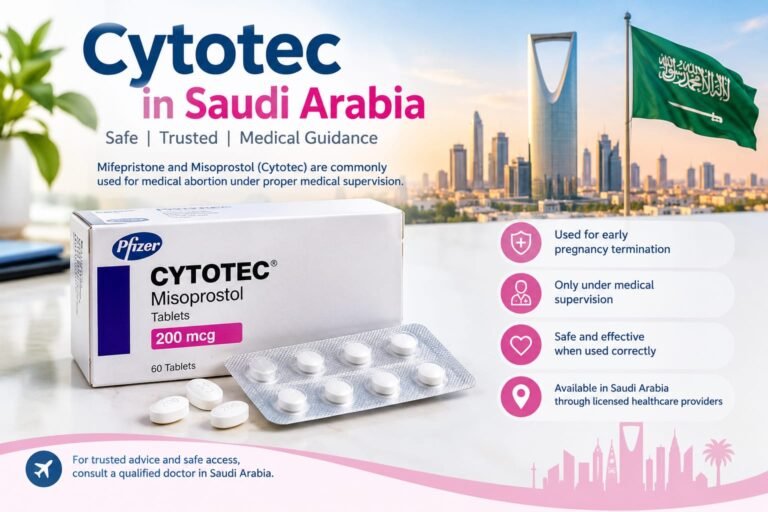
Misoprostol is a medication that can be used to facilitate an abortion. As a result, individuals looking to learn more about this medication often search terms like “misoprostol abortion” and “Cytotec abortion.”
Although various web pages may provide information regarding medical abortions, these web pages are not to be construed as personalized medical services.
This article provides an overview of the spectrum of effects of this medication, as well as potential safety concerns.
What Is Misoprostol?
Misoprostol is a medicine that belongs to the prostaglandin family. It can cause changes in the cervix and contractions of the uterus.
Misoprostol has several medical uses. In reproductive healthcare, it may be used in different obstetric and gynecological situations, including medical abortion.
Cytotec is one brand associated with misoprostol, although misoprostol is also available under other brand names.
How Does Misoprostol Work for Abortion?
Misoprostol brings about changes to the cervix and causes strong contractions in the uterus to help expel pregnancy tissue.
Medical abortion may be done using mifepristone and misoprostol. In some cases, where pregnancy is not too advanced and under the right conditions, misoprostol may be used on its own to bring about abortion.
Treatment should not be done based on information from a general article that is available on the internet.
Misoprostol Alone and Mifepristone With Misoprostol
Medical abortion can involve different medication approaches.
One approach uses mifepristone followed by misoprostol. Another uses misoprostol alone.
These approaches have different considerations, and the appropriate regimen depends on the pregnancy duration and the individual’s circumstances.
WHO provides evidence-based recommendations for medical abortion according to pregnancy duration and clinical situation.
What Happens After Misoprostol?
When misoprostol is used for medical abortion, uterine cramping and vaginal bleeding commonly occur.
Some people may also experience:
● Nausea
● Vomiting
● Diarrhea
● Chills
● Fever
● Headache
● Tiredness
The experience can differ from one person to another.
Bleeding and cramping do not necessarily indicate a complication, but severe or unusual symptoms require medical assessment.
How Much Bleeding Is Normal?
Bleeding can vary considerably during medical abortion.
Some people experience heavier bleeding and stronger cramps initially, followed by lighter bleeding or spotting.
However, very heavy bleeding can be dangerous.
Urgent medical care should be sought if bleeding is unusually heavy, rapidly increasing, or accompanied by fainting, severe dizziness, weakness, or severe abdominal pain.
What About Pain and Cramping?
Cramping occurs because misoprostol stimulates contractions of the uterus.
The level of discomfort varies between individuals.
Severe or worsening abdominal or pelvic pain should not automatically be assumed to be a normal effect of the medicine. It may require medical assessment, particularly when accompanied by dizziness, fainting, or other concerning symptoms.
Why Ectopic Pregnancy Is Important
An ectopic pregnancy develops outside the uterus.
Misoprostol does not treat an ectopic pregnancy.
This is an important safety consideration because an untreated ectopic pregnancy can become an emergency.
Possible warning symptoms include:
● Severe abdominal or pelvic pain
● One-sided pain
● Fainting
● Significant dizziness
● Shoulder-tip pain in some cases
● Concerning vaginal bleeding
These symptoms require prompt medical evaluation.
Does Misoprostol Always Complete an Abortion?
Medical abortion is highly effective when recommended regimens are used appropriately, but no medical treatment is guaranteed to work in every individual.
Sometimes additional medical care may be necessary.
Follow-up may be recommended depending on the circumstances and symptoms. A person should seek professional medical advice if pregnancy symptoms continue, bleeding or pain becomes concerning, or there is uncertainty about whether the abortion has been completed.
Can Misoprostol Be Self-Managed?
WHO states that self-management of medical abortion can be an option in certain circumstances when appropriate information, medicines, and support are available.
Self-management does not mean that every person can safely follow the same instructions.
Important factors can include pregnancy duration, the possibility of ectopic pregnancy, medical history, current medications, and access to emergency healthcare.
Misoprostol and Cytotec
Cytotec is a brand associated with misoprostol.
People searching for Cytotec for abortion may therefore also encounter information about misoprostol.
When researching a product, check the packaging for:
● Active ingredient
● Strength
● Manufacturer
● Expiry date
● Product information
● Regulatory details
Avoid relying on an online advertisement alone to identify a medicine.
Misoprostol in Saudi Arabia
People searching for misoprostol in Saudi Arabia, Cytotec in Riyadh, or Cytotec in Jeddah should consider both medical information and applicable Saudi regulations.
Medical information about how misoprostol works does not establish that a particular use is legally permitted in a specific situation.
For more information about Cytotec and misoprostol in the Saudi context, read our detailed guide:
Cytotec in Saudi Arabia
Arabic readers can also find additional educational information here:
حبوب سايتوتك للإجهاض
Important Safety Considerations
Misoprostol should not be treated like an ordinary over-the-counter medicine.
Before using information about medical abortion, it is important to understand the pregnancy duration, consider the possibility of ectopic pregnancy, and know where to obtain medical care if complications occur.
People should also be cautious about medicines obtained from unverified sellers because the authenticity, strength, and quality of a product may be uncertain.
Frequently Asked Questions
What is misoprostol used for?
Misoprostol has several medical uses. It is also used in certain medical abortion protocols and other reproductive-health situations.
Is misoprostol the same as Cytotec?
Cytotec is a brand associated with misoprostol. Misoprostol is the active ingredient.
Does misoprostol cause bleeding?
Yes. Bleeding can occur when misoprostol is used for medical abortion.
Does misoprostol cause cramps?
Yes. Uterine cramping is a common effect because misoprostol causes the uterus to contract.
Can misoprostol treat ectopic pregnancy?
No. Misoprostol does not treat an ectopic pregnancy. Suspected ectopic pregnancy requires medical evaluation.
What should I do if I develop severe pain or heavy bleeding?
Seek urgent medical attention, especially if symptoms include fainting, severe dizziness, significant weakness, or rapidly worsening pain or bleeding.
Medical Disclaimer
This article is for general educational and informational purposes only. It does not provide a personalized prescription, dosage, or treatment plan.
Medical abortion decisions should take pregnancy duration, individual medical circumstances, applicable healthcare requirements, and local laws into account. Seek professional medical care when needed, particularly if severe pain, heavy bleeding, fainting, or other emergency symptoms occur.