
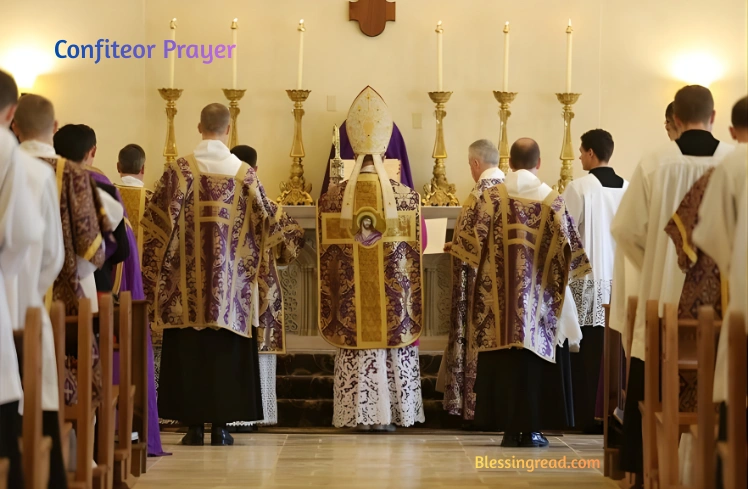
Confiteor Prayer opens the heart with truth and humility. It is a prayer spoken aloud or quietly, where a person admits personal faults before God and asks for mercy. The words are simple, but the meaning is deep: taking responsibility, asking forgiveness, and choosing to begin again with a clean heart.
This prayer has been used for centuries in the Catholic Church, especially during Mass. It is trusted because it is rooted in Scripture, tradition, and lived faith. People return to it daily because it speaks plainly to real life. No special knowledge is required. If a person can speak honestly, this prayer is for them.
Here, the Confiteor Prayer is approached with respect, care, and clarity. It is shared to support prayer at home, in church, or in quiet moments of reflection. The purpose is not perfection, but sincerity. When prayed with attention, it helps calm the mind, soften the heart, and restore peace before God and others.
Confiteor Prayer With Meaning
The Confiteor Prayer is a formal act of penitence used in the Catholic Church. It is prayed to openly admit personal sin before God, ask forgiveness, and seek the prayers of the Church. The word Confiteor comes from Latin and means “I confess.”
This prayer teaches three essential truths:
-
Personal responsibility for sin
-
Trust in God’s mercy
-
Communal prayer, asking others to pray for us
It is most commonly prayed at the beginning of Mass during the Penitential Act, but it is also used in private devotion and communal prayer services.
The Confiteor does not excuse sin or hide it. Instead, it invites honesty before God and prepares the soul to worship with humility and peace.
Confiteor Prayer (Latin – Official Text)

The Latin text below is the official Roman Missal version, still valid and used in Latin liturgies worldwide.
Confiteor Deo omnipotenti
et vobis, fratres,
quia peccavi nimis
cogitatione, verbo, opere et omissione:
mea culpa, mea culpa, mea maxima culpa.
Ideo precor beatam Mariam semper Virginem,
omnes Angelos et Sanctos,
et vos, fratres,
orare pro me ad Dominum Deum nostrum.
The Confiteor Prayer – Old Version (Pre-1970)

The old version of the Confiteor was used before the liturgical reforms following the Second Vatican Council. It is longer and explicitly names several saints.
English Translation (Traditional Form):
I confess to Almighty God,
to blessed Mary ever Virgin,
to blessed Michael the Archangel,
to blessed John the Baptist,
to the holy Apostles Peter and Paul,
and to all the Saints,
that I have sinned exceedingly
in thought, word, and deed,
through my fault, through my fault,
through my most grievous fault.Therefore I beseech blessed Mary ever Virgin,
blessed Michael the Archangel,
blessed John the Baptist,
the holy Apostles Peter and Paul,
and all the Saints,
to pray to the Lord our God for me.
This version emphasizes intercession by named saints and personal guilt expressed strongly.
The Confiteor Prayer – New Version (Current Form)

The new version, introduced after Vatican II and used in today’s Mass, is shorter but fully faithful to Catholic teaching.
English Text (Roman Missal):
I confess to Almighty God
and to you, my brothers and sisters,
that I have greatly sinned,
in my thoughts and in my words,
in what I have done and in what I have failed to do,
through my fault, through my fault,
through my most grievous fault;
therefore I ask blessed Mary ever-Virgin,
all the Angels and Saints,
and you, my brothers and sisters,
to pray for me to the Lord our God.
This form highlights:
-
Shared responsibility within the Church
-
Mercy over fear
-
Readiness for worship
Old and New Versions Compared (Verified)
| Aspect | Old Version | New Version |
|---|---|---|
| Period of Use | Pre-1970 Roman Rite | Post-1970 Roman Missal |
| Length | Longer | Shorter |
| Saints | Individually named | Named as a group |
| Liturgical Status | Extraordinary Form | Ordinary Form |
| Church Approval | Fully approved | Fully approved |
Doctrinal Clarification (Important)
The Confiteor Prayer:
-
Expresses repentance
-
Seeks God’s mercy
-
Forgives venial sins when prayed sincerely
It does not absolve mortal sins, which require sacramental confession according to Catholic doctrine. This teaching is consistent across the Catechism and liturgical law.
Read Also: Memorare Prayer
Trust & Transparency Statement
This content is written for Blessingread.com using:
-
Official Roman Missal texts
-
Long-standing Catholic liturgical sources
-
Established Church practice
No interpretations, personal rewrites, or promotional influences are included.
Conclusion
The Confiteor Prayer remains powerful because it invites honesty without fear. It reminds us that mercy is always offered when we speak truthfully before God. Whether prayed daily or occasionally, it brings a sense of relief and spiritual readiness.
At Blessingread.com, prayers are shared with responsibility and reverence, shaped by lived experience and long-standing Christian practice. This prayer is offered to support real people in real moments, without pressure or complexity.
May these words help create space for peace, forgiveness, and renewal whenever they are spoken.
Practical Use at a Glance
| Aspect | What It Offers | When to Pray |
|---|---|---|
| Personal Prayer | Clears conscience, restores calm | Morning or night |
| During Mass | Prepares heart for worship | At the beginning of Mass |
| Family Prayer | Teaches accountability | Shared prayer time |
Important Note: This prayer is not a replacement for the Sacrament of Reconciliation in Catholic teaching. It prepares the heart but does not remove the need for confession when required.
About the Author
Written by: Ravi Kumar, Faith Content Writer with 5+ years of experience creating prayer guides, devotional content, and spiritual reflections that inspire and uplift readers.
? FAQs About Confiteor Prayer
What is the Confiteor Prayer used for?
The Confiteor Prayer is used to admit personal sins before God and ask for mercy. It is most often prayed at the beginning of the Catholic Mass as part of the Penitential Act, preparing the heart for worship.
Is the Confiteor Prayer mandatory at every Mass?
No. The Confiteor is one of several approved forms of the Penitential Act. A priest may choose another form, but when the Confiteor is used, it must be prayed exactly as approved in the Roman Missal.
Does the Confiteor forgive sins?
The Confiteor forgives venial sins when prayed with sincerity and repentance. It does not forgive mortal sins, which require the Sacrament of Reconciliation according to Catholic teaching.
Why did the Confiteor Prayer change?
The wording changed after the Second Vatican Council to simplify language and highlight the communal nature of repentance. The meaning and purpose of the prayer remained the same.
Are both the old and new Confiteor prayers valid?
Yes. The old version is valid in the Extraordinary Form of the Mass, and the new version is valid in the Ordinary Form. Both are officially approved by the Catholic Church.
Can the Confiteor Prayer be prayed at home?
Yes. Many Catholics pray the Confiteor privately as an act of repentance, especially during morning or evening prayer or before personal reflection.