
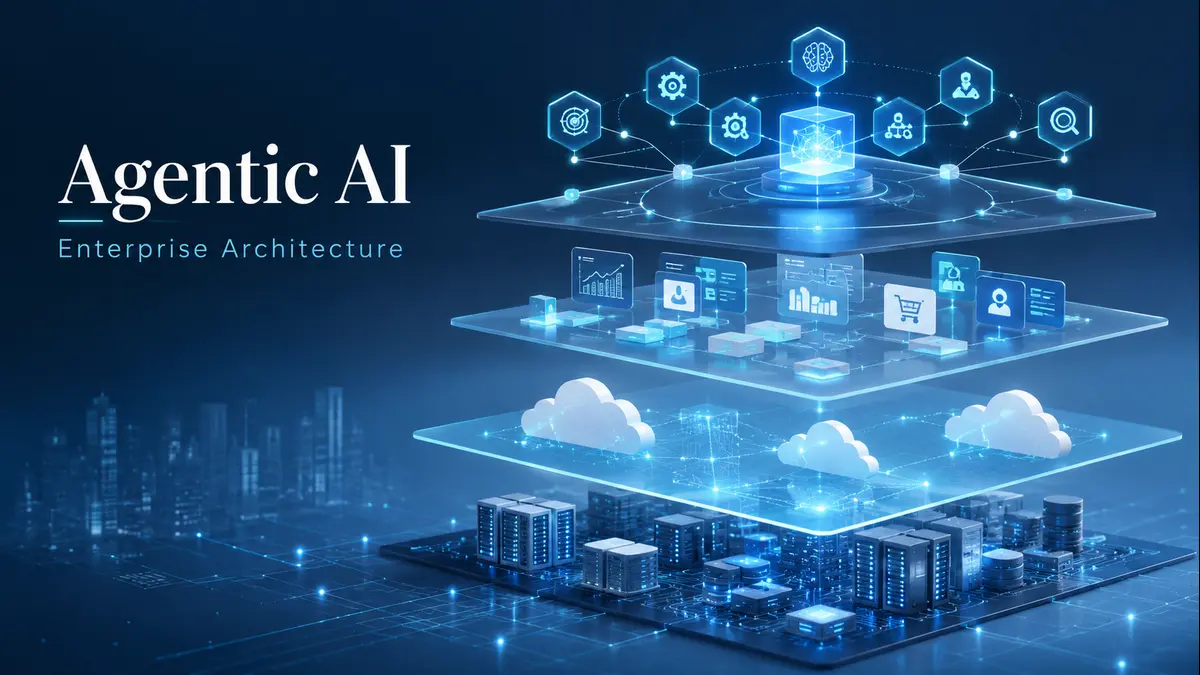
The Rise of Agentic AI in the Digital Landscape
The technology sector is witnessing a remarkable shift with the emergence of Agentic AI, a sophisticated advancement that moves beyond traditional artificial intelligence models. Unlike conventional systems that primarily respond to prompts, Agentic AI can independently plan, reason, and execute tasks with minimal human intervention. Organizations across various industries are exploring its potential to streamline workflows, improve decision-making, and enhance operational efficiency. From intelligent business automation to advanced customer engagement solutions, these systems are redefining how digital environments function. The growing demand for faster processes and smarter interactions has accelerated the adoption of Agentic AI, making it one of the most discussed technological developments in 2026. As digital transformation continues to influence global markets, Agentic AI is emerging as a significant force capable of reshaping productivity standards and introducing new possibilities for innovation.UU88.DOG
How Agentic AI Differs from Traditional Artificial Intelligence
Traditional artificial intelligence systems generally operate within predefined instructions and require frequent human guidance to complete complex tasks. Agentic AI introduces a more autonomous framework by combining reasoning capabilities, memory retention, goal-oriented planning, and adaptive learning. This enables the technology to analyze situations, determine appropriate actions, and adjust strategies based on evolving conditions. Such capabilities make Agentic AI particularly valuable in dynamic environments where rapid decisions are essential. Enterprises are increasingly integrating these intelligent agents into business processes, allowing them to handle repetitive operations, gather insights, and coordinate tasks across multiple platforms. The result is a more responsive technological ecosystem that reduces manual workloads while maintaining accuracy and consistency. This progression highlights a significant evolution in artificial intelligence, positioning Agentic AI as a transformative solution for modern digital challenges.Đăng Ký UU88
Industry Applications Driving Widespread Adoption
The influence of Agentic AI extends across numerous sectors, demonstrating its versatility and practical value. In healthcare, intelligent agents assist with administrative tasks, patient scheduling, and data analysis, enabling professionals to focus more on care delivery. Financial institutions utilize these systems to monitor transactions, identify unusual activities, and generate analytical reports. Manufacturing environments benefit from predictive maintenance and automated production management, while retail businesses leverage Agentic AI to personalize customer experiences and optimize inventory operations. The education sector is also embracing intelligent agents to support learning pathways and administrative efficiency. These applications illustrate how Agentic AI is becoming deeply integrated into everyday operations, helping organizations respond to evolving demands with greater agility. As technological capabilities continue to advance, the range of practical use cases is expected to expand even further.
Challenges and Considerations in Agentic AI Development
Despite its growing popularity, Agentic AI presents several important considerations that require careful attention. Data privacy, transparency, accountability, and ethical decision-making remain critical topics in discussions surrounding autonomous systems. Since these intelligent agents can make decisions with limited human oversight, organizations must establish governance frameworks that ensure responsible deployment. Security is another key concern, particularly when Agentic AI interacts with sensitive information or critical infrastructure. Developers and technology leaders are working to create safeguards that balance innovation with reliability and trust. Regulatory bodies worldwide are also examining approaches to manage the development and implementation of advanced AI technologies. Addressing these challenges is essential for fostering long-term confidence in Agentic AI and ensuring that its capabilities are utilized in a manner that aligns with societal expectations and organizational objectives.
Conclusion
Agentic AI represents a notable advancement in the evolution of modern technology, introducing greater autonomy, adaptability, and efficiency across a wide range of industries. Its ability to independently plan and execute tasks is creating new opportunities for organizations seeking smarter operational models and enhanced digital experiences. While considerations related to governance, security, and ethics remain important, ongoing developments continue to strengthen the reliability of these systems. As adoption expands and capabilities mature, Agentic AI is likely to remain a prominent technological trend shaping the future of business, innovation, and digital transformation in the years ahead.
