
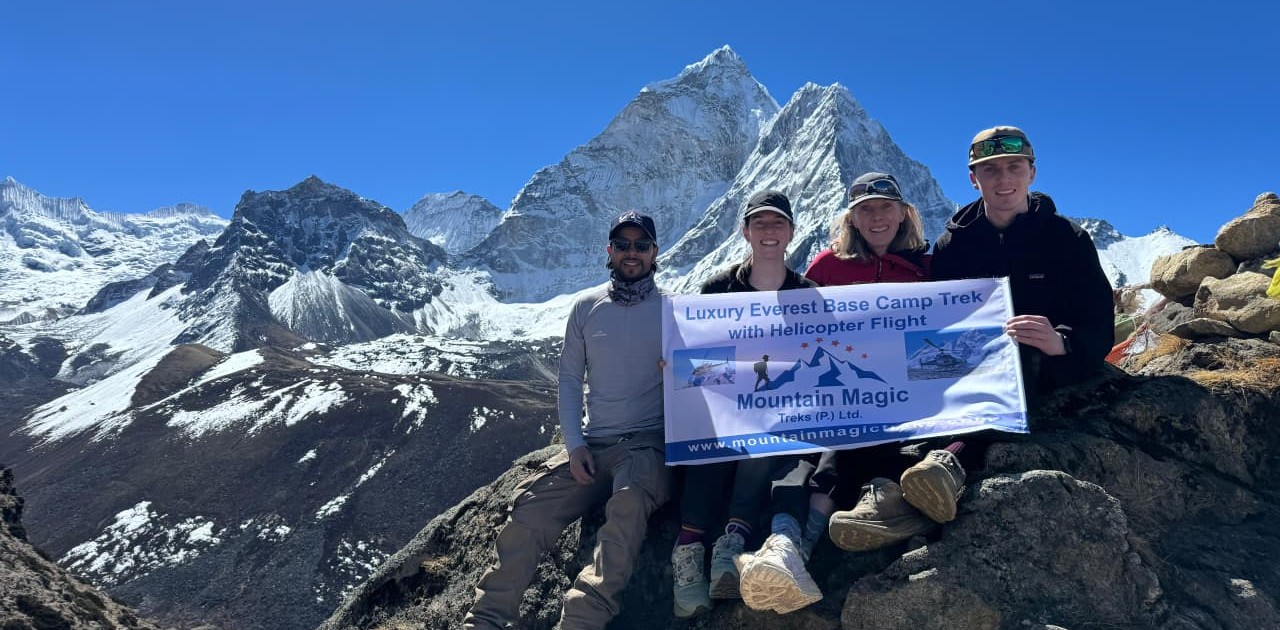
An Everest journey is not only about reaching a famous place. It is also about the small moments along the way. A quiet trail, tea, prayer flags, and a clear mountain view can become lasting memories.
The Everest Base Camp Trek with helicopter return lets travelers enjoy the classic Everest experience while saving time on the way back. You walk through the Khumbu region, reach Everest Base Camp, and then return by helicopter instead of walking the full route back, subject to weather and flight conditions.
Begin Each Day With a Good Routine
Mountain mornings are simple. Have breakfast, check your water, and organize your day bag.
Keep Important Items Handy
Carry sunglasses, sunscreen, snacks, gloves, and water where you can reach them quickly.
Enjoy the Trail, Not Just the Destination
Try not to make the trek a race.
Watch the Scenery Change
Near Lukla, the landscape is greener, with forests, hills, rivers, and small farms.
As you move toward Namche and higher areas, trees become fewer and the mountains become more dominant. Near the upper trail, rocks, glaciers, and snow-covered peaks shape the landscape.
That gradual change makes the walk special.
Make Time for Mountain Life
Tea houses are an important part of the Everest experience. They provide food, beds, warmth, and a place to meet other trekkers.
Enjoy the Evenings
After several hours on the trail, a simple hot meal can feel surprisingly good. You may share stories with other trekkers or talk with your guide.
Explore Namche Without Rushing
Namche Bazaar is one of the best-known settlements on the route. It is also an important acclimatization stop.
Take a Short Walk
A gentle hike around Namche can provide mountain views while giving your body time to adjust.
You can also visit shops, relax, or simply enjoy the surroundings. The goal is to rest.
Notice the Local Culture
The Everest region is home to Sherpa communities with strong Buddhist traditions.
Prayer flags, mani stones, prayer wheels, and monasteries can be seen along the trail.
Be a Respectful Visitor
Ask before taking close photographs of people. Follow local rules at monasteries and avoid making noise in quiet religious areas.
Save Energy for Higher Elevations
The trail becomes harder as you climb toward Dingboche, Lobuche, and Gorakshep. The air is thinner, and uphill sections can feel tiring.
Change Your Pace
Take shorter steps and keep a steady rhythm. Drink water regularly and stop for breaks before you become exhausted.
Do not compare your speed with another trekker.
The Everest Base Camp Trek with helicopter return rewards patience.
Make Your Base Camp Moment Count
After days of walking, reaching Everest Base Camp is a major achievement.
Remember the Journey Behind You
Think about Lukla, the suspension bridges, Namche, Tengboche, Dingboche, and the high trail you have already crossed.
Remembering the effort behind the destination makes the moment more special. Take photographs and enjoy it.
Climb Kala Patthar for a Bigger View
Kala Patthar reaches approximately 5,545 meters and is one of the highest points on the itinerary. It is famous for views of Everest and nearby Himalayan peaks.
Take the Climb Slowly
The altitude makes this climb challenging. An early start can provide beautiful morning light.
Wear suitable layers and follow your guide’s advice.
Finish With a View From the Sky
The helicopter return is one of the biggest differences between this trip and a traditional Everest Base Camp journey.
After completing the high-altitude trekking section, you can leave the region by helicopter, depending on safe flying conditions.
See the Route From Above
Trails that looked long from the ground become thin lines across the mountains. Villages look tiny, valleys appear wider, and glaciers become part of a much larger landscape.
Seeing the region from the air gives you a completely new perspective. This makes the Everest Base Camp Trek with helicopter return a memorable combination of trekking and flight.
Keep Your Plans Flexible
Mountain weather can change quickly. Clouds, wind, and poor visibility can affect helicopter operations.
Leave Extra Time
Avoid booking an important flight immediately after your expected helicopter arrival. Extra time can make a delay easier to handle.
Flexibility is important in Himalayan travel.
Final Thoughts
The Everest Base Camp Trek with helicopter return gives travelers a chance to experience the Everest region through walking, culture, mountain scenery, and an aerial journey.
The helicopter saves time, but it does not replace the trekking experience. You still walk through the Khumbu Valley, adjust to high altitude, and reach Base Camp.
Walk comfortably, respect local communities, protect your energy, and stay flexible when conditions change.
Frequently Asked Questions
Is the Everest Base Camp Trek with helicopter return suitable for first-time trekkers?
It can be, provided you prepare properly and are ready for long walking days and high altitude.
What should I do during acclimatization?
Take short hikes, explore nearby areas, rest, eat well, and allow your body time to adjust.
Why is Kala Patthar popular?
It is a high viewpoint offering impressive views of Mount Everest and nearby peaks.
Can weather delay the helicopter?
Yes. Mountain flights depend on suitable weather, visibility, and safe operating conditions.