
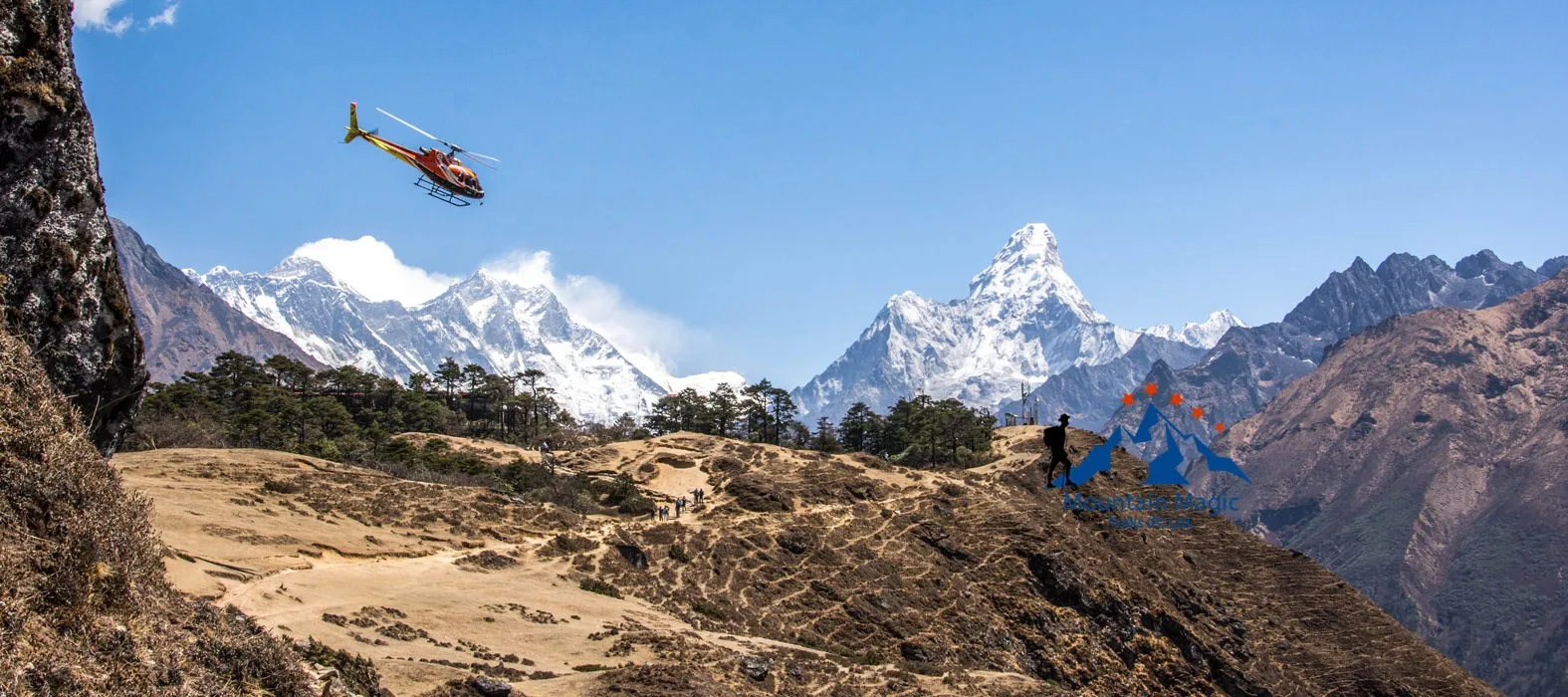
There is a side of the Everest region that you may not notice in a photo.
It is the quiet.
Not every part of the trail is filled with conversation, camera clicks, or groups of trekkers. There are long stretches when the only things around you are mountains, wind, stone, and your own footsteps.
Those quiet moments can become some of the strongest memories of the journey.
The Everest Base Camp Trek With Helicopter Return gives you enough time on foot to experience this slower side of the Khumbu before ending the trip with a helicopter flight from the high mountains toward Kathmandu.
The Noise of Daily Life Slowly Disappears
Before the trek begins, life can feel crowded.
Phones keep buzzing. Cars fill the roads. People are rushing somewhere.
Then the trail takes over.
The pace becomes simple.
Walk. Stop. Drink water. Eat. Rest. Walk again.
There is no need to check the clock every few minutes.
That change can feel strange during the first couple of days. Later, many trekkers begin to enjoy it.
Your Phone Becomes Less Important
You will probably still take photos.
You should.
But after a while, the mountains can make your phone feel less interesting.
There is something different about standing on a trail and watching a huge peak change color as clouds move across it.
You do not need an app for that.
Sometimes the best thing to do is simply look.
A Quiet Trail Can Say More Than a Viewpoint
Famous viewpoints naturally attract attention.
But some of the most enjoyable sections may not have a famous name.
A bend in the trail can open toward a valley. A small bridge can sit above a fast-moving river. A line of prayer flags can appear between two rocky slopes.
You may stop for a minute without knowing exactly why.
That is part of the charm.
The Everest Base Camp Trek With Helicopter Return is not made memorable only by the major stops. The spaces between them matter too.
Listen to the Mountain Environment
The Everest region has its own sounds.
You may hear water moving through a valley long before you see the river.
Wind can become stronger as the trail rises.
In quieter sections, you may hear little more than boots touching the ground.
Then a group of trekkers appears around the corner and the silence disappears for a while.
That contrast makes you notice the quiet even more when it returns.
Villages Have Their Own Rhythm
The silence is not everywhere.
Mountain villages can be busy.
Namche Bazaar, for example, is an important center in the Khumbu region. Shops, lodges, trekkers, guides, and local residents give it a lively feel.
Further along the route, settlements become smaller and the surroundings more open.
This gradual change is interesting.
You move from places where people gather to areas where the landscape begins to dominate everything.
A Tea House Can Feel Like a Safe Little World
After a long day outside, a tea house can feel surprisingly comfortable.
You enter, remove your outer layers, sit down, and warm yourself with food or a drink.
Outside, the mountain air may be freezing.
Inside, people are sharing stories about the day’s walk.
These simple evenings can become some of the most enjoyable parts of the trek.
High Altitude Makes You More Aware
At lower elevations, you can often walk while thinking about something else.
Higher up, that becomes harder.
You notice your breathing.
You notice the effort in your legs.
You pay more attention to your pace.
This is one reason acclimatization is built into the route. The published itinerary includes stops in Namche Bazaar and Dingboche before the trek continues toward the higher sections.
The purpose is not to waste a day.
It is to give your body time to adjust.
The Landscape Gets More Open
As the trail climbs, the thick greenery of the lower sections gradually gives way to a more rugged environment.
There are fewer trees.
Rock becomes more common.
The valleys feel larger.
Snow-covered peaks become part of your daily view.
Eventually, the landscape around Gorakshep and Everest Base Camp feels very different from the beginning of the trek.
You have moved from a world of forests and green hills into a high mountain environment shaped by rock, ice, and wind.
One Final Morning Changes the Mood
The Kala Patthar section is often one of the most memorable parts of the trip.
The published itinerary places its highest point at about 5,545 meters. From this area, trekkers can see Everest along with peaks such as Pumori, Lhotse, and Nuptse.
Early morning can make the experience even more striking.
The first light reaches the mountains while the lower valleys remain darker.
You have already walked for days to reach this place.
Now you can simply stand there and watch the landscape wake up.
Then the Silence Is Replaced by a Rotor
This is where the journey takes an unexpected turn.
After spending days listening to your footsteps, the sound of a helicopter becomes impossible to ignore.
The return flight is not just a faster way home.
It completely changes the way you experience the region.
The published route uses a helicopter from the Gorakshep area toward Kathmandu, with possible short stops depending on weather and flight conditions.
The Same Landscape Looks Smaller
From the ground, a valley can seem enormous.
From the air, it becomes part of a much larger picture.
Trails that took hours to walk can look incredibly thin. Villages appear tiny between giant slopes. Rivers reveal their full paths through the valleys.
You suddenly understand the scale of the journey in a way that walking alone cannot show you.
Do Not Expect the Mountains to Follow Your Schedule
There is one thing every traveler should accept before the flight.
Weather has a say.
Wind, clouds, visibility, and other conditions can affect helicopter operations. The trip information specifically notes that the return flight may include changes or stops based on weather and wind.
So keep your plans flexible.
A little extra time in your schedule is much better than turning a weather delay into a major travel problem.
The Quiet Comes Back Later
Eventually, the helicopter lands.
The engine stops.
The journey is nearly over.
And perhaps the strangest thing happens.
The noise disappears again.
You are back on the ground, but your mind is still somewhere in the Khumbu.
You may think about the trail, the villages, the cold mornings, and the enormous mountains you just left behind.
That is when you realize that the quiet parts of the trek were never empty.
They were the moments when you actually noticed where you were.
FAQs
Is the Everest Base Camp Trek With Helicopter Return a full trekking experience?
Yes. The route includes trekking through the Khumbu, acclimatization stops, Everest Base Camp, and Kala Patthar before the helicopter return.
Where does the helicopter return start?
The published itinerary describes pickup around Gorakshep or a nearby higher location, depending on weather and operational conditions.
What is the highest point of the trip?
Kala Patthar is listed at approximately 5,545 meters.
Can weather affect the helicopter?
Yes. Mountain weather can change quickly, and flight operations may be adjusted when conditions are unsuitable.
What makes the helicopter return different?
It allows you to experience the Everest region slowly on foot and then see the same landscape from above on the way back.
Conclusion
The Everest Base Camp Trek With Helicopter Return has two very different sounds.
First, there is the quiet rhythm of walking: boots on stone, rivers below, wind through the valley, and the occasional conversation with another trekker.
Then comes the helicopter.
For a short time, the silence is replaced by the sound of the rotor as the trail disappears below you.
That contrast is what makes the ending memorable.
You do not just leave Everest.
You see the landscape one final time from a completely different place—and then carry the quiet of the mountains home with you.