
As the nights grow longer and the air fills with the soft glow of candlelight, Hanukkah invites us to pause, reflect, and celebrate miracles. These Hanukkah blessings help us connect to tradition, bring warmth to our homes, and remind our hearts how even the smallest light can shine beautifully in darkness.
At its heart, Hanukkah is a story of faith and perseverance of rededication, of hope, and of divine protection. The blessings recited during the lighting of the menorah are not just ritual words: they are a spiritual thread that ties us to generations past, and a reminder of the power of gratitude, faith, and community.
The 3 Traditional Hanukkah Blessings
In Jewish tradition, there are three blessings recited when lighting the Hanukkah candles. On the first night, all three are said; on the remaining nights, only the first two are recited.
1. Blessing for Lighting the Candles (Le’hadlik Ner)
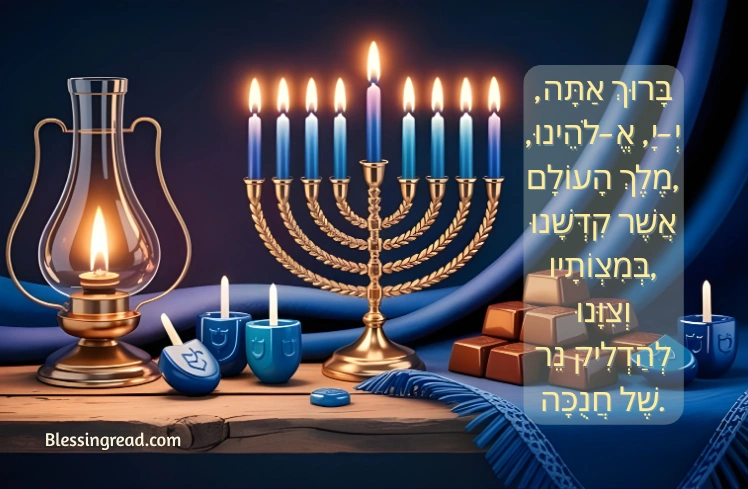
Hebrew:
בָּרוּךְ אַתָּה, יְ-יָ, אֱ-לֹהֵינוּ, מֶלֶךְ הָעוֹלָם,
אֲשֶׁר קִדְּשָׁנוּ בְּמִצְוֹתָיו,
וְצִוָּנוּ לְהַדְלִיק נֵר שֶׁל חֲנֻכָּה.
Transliteration:
Baruch atah Adonai, Eloheinu Melech ha-olam,
asher kid’shanu b’mitzvotav,
v’tzivanu l’hadlik ner shel Hanukkah.
English Translation:
Blessed are You, Lord our God, King of the universe,
who has sanctified us with His commandments
and commanded us to kindle the Hanukkah light.
Reflection:
This opening blessing is a sacred invitation. When we light the menorah, we acknowledge that our actions like kindling a flame are spiritually meaningful. It reminds us that even a simple act of lighting a candle is bound up with our identity and commandments. The light we kindle is not only physical but deeply symbolic: a spiritual flame that connects us to our faith.
2. Blessing for the Miracles (She’asah Nisim)
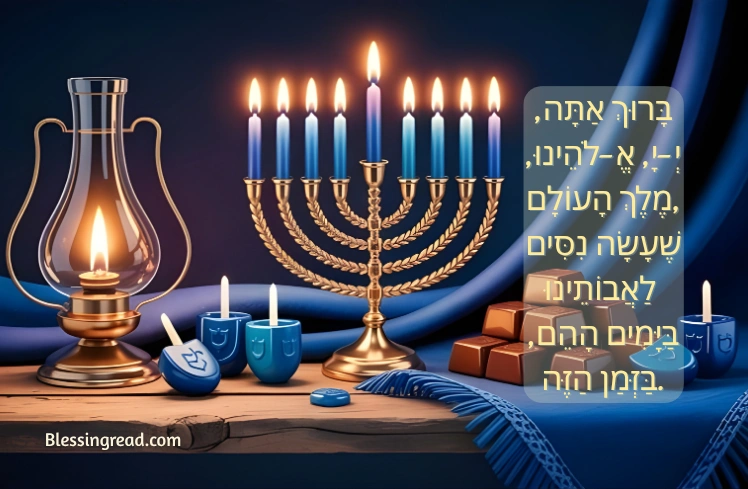
Hebrew:
בָּרוּךְ אַתָּה, יְ-יָ, אֱ-לֹהֵינוּ, מֶלֶךְ הָעוֹלָם,
שֶׁעָשָׂה נִסִּים לַאֲבוֹתֵינוּ
בַּיָּמִים הָהֵם, בַּזְּמַן הַזֶּה.
Transliteration:
Baruch atah Adonai, Eloheinu Melech ha-olam,
she’asah nisim la’avoteinu
bayamim ha’hem, bazman hazeh.
English Translation:
Blessed are You, Lord our God, King of the universe,
who performed miracles for our ancestors in those days, at this season.
Reflection:
This blessing is about memory and gratitude. By acknowledging the “miracles” of past generations, we connect to our roots to the courage of the Maccabees, the rededication of the Temple, and the faith that fueled that journey. It helps us remember that our freedom, our traditions, and our light are gifts born from resilience.
3. Shehecheyanu – Blessing of Gratitude (First Night Only)
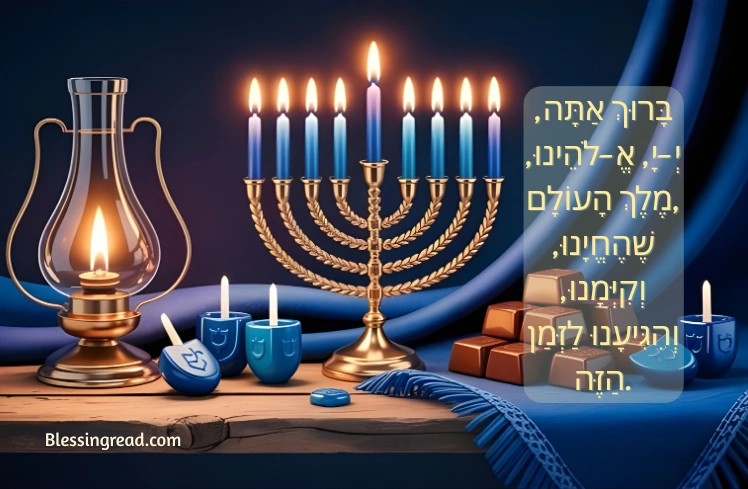
Hebrew:
בָּרוּךְ אַתָּה, יְ-יָ, אֱ-לֹהֵינוּ, מֶלֶךְ הָעוֹלָם,
שֶׁהֶחֱיָנוּ, וְקִיְּמָנוּ, וְהִגִּיעָנוּ לַזְּמַן הַזֶּה.
Transliteration:
Baruch atah Adonai, Eloheinu Melech ha-olam,
shehecheyanu, v’kiy’manu, v’higiyanu lazman hazeh.
English Translation:
Blessed are You, Lord our God, King of the universe,
who has kept us alive, sustained us, and enabled us to reach this season.
Reflection:
This is a deeply human blessing one of gratitude for life, health, and continuity. When we say “Shehecheyanu,” we are thanking God for bringing us to this moment: for giving us strength, for preserving us, and for allowing us to take part in the joy of this holiday. On the first night, this blessing marks new beginnings, renewed hope, and the gift of being part of the story.
Hanukkah Blessings PDF:
Why These Blessings Matter
-
Connection to History: These prayers ground us in the Hanukkah narrative not just the miracle of the oil, but the courage and faith of our ancestors.
-
Ritual and Reflection: Lighting the menorah is a simple ritual, but the blessings turn it into a spiritual act. They transform a physical flame into a source of inner light and purpose.
-
Gratitude and Faith: Through these words, we express gratitude for the commandments, for miracles, for being alive. Each blessing encourages us to pause, reflect, and open our hearts.
-
Community: Saying these blessings together (with family, in synagogue, or alone) unites us across time and space, reminding us we are part of a larger tradition.
Tips for Lighting & Reciting the Blessings
-
Order of Lighting: Use the shamash (the helper candle) to light the other candles. As per tradition, the new candle is lit first.
-
When to Say the Blessings:
-
On the first night, say all three blessings.
-
On the following nights, recite only the first two.
-
-
Pronunciation: If you’re new to Hebrew, you can follow the transliterations above. Practicing beforehand can help make the recitation smooth and meaningful.
-
Meaningful Pause: After each blessing, take a moment breathe, reflect on the words, and let the meaning resonate.
-
Celebrate Fully: Once the candles are lit and the blessings recited, enjoy the glow share a song (like Maoz Tzur), sing Hanukkah tunes, or spend quiet moments in gratitude.
A Final Blessing of Light
May your Hanukkah be filled with the warmth of candlelight, the strength of ancient faith, and the gentle joy of gratitude. May these blessings guide your spirit, bring peace to your home, and remind you that even a single flame can illuminate the deepest darkness.
? FAQs About Hanukkah Blessings
1. What are the three Hanukkah blessings?
The three blessings are the candle-lighting blessing, the blessing for miracles, and the Shehecheyanu blessing, which is recited only on the first night.
2. When do you say the Hanukkah blessings?
You recite the blessings before lighting the candles. On the first night, all three blessings are said; on the other nights, only the first two are recited.
3. Do I light the candles before or after saying the blessings?
Traditionally, the blessings are said before lighting the candles. After completing the blessings, the shamash is used to light the menorah candles.
4. What is the meaning of the Shehecheyanu blessing on Hanukkah?
The Shehecheyanu expresses gratitude for being alive, sustained, and able to reach this moment. It marks new beginnings and the joy of experiencing Hanukkah again.
5. What should I do after saying the blessings and lighting the candles?
Many families sing songs, enjoy traditional foods, sit by the glow of the menorah, reflect on gratitude, or simply spend time together.
6. What if I miss a night of lighting the menorah?
If you miss a night, continue lighting on the next evening with the correct number of candles for that night. There is no need to “make up” missed candles.
➽ Continue spreading light and hope explore more spiritual reflections and blessing on Blessing Read, and share these Hanukkah blessings with your loved ones.
