
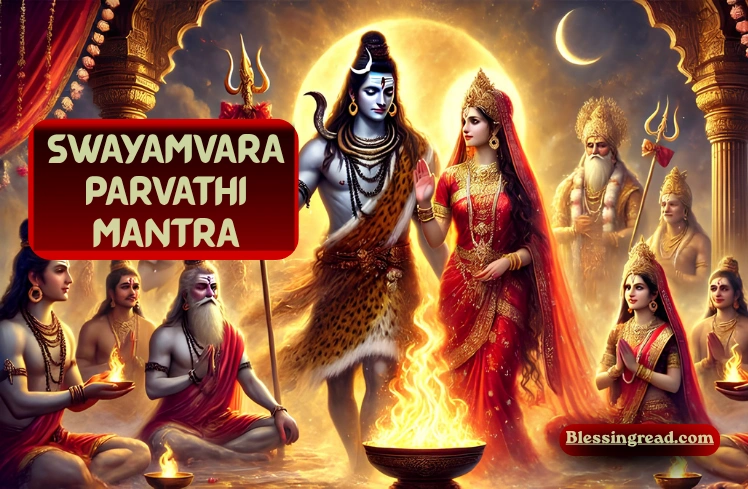
The Swayamvara Parvathi Mantra is one of the most revered and spiritually potent mantras in the Hindu devotional tradition. It is dedicated to Goddess Parvati – the divine consort of Lord Shiva and the embodiment of love, grace, and sacred feminine power. This mantra holds a special place among those who seek blessings for love, companionship, and auspicious marriage.
The word “Swayamvara” carries deep cultural and spiritual meaning. In ancient Indian tradition, a Swayamvara was a sacred ceremony in which a princess would choose her own husband from among worthy suitors. Goddess Parvati herself is said to have observed intense tapas (penance) and austerities to win the heart of Lord Shiva – making her the eternal symbol of devotion, patience, and the power of love.
The Swayamvara Parvathi Mantra invokes this very energy. Devotees chant this Parvati Mantra with heartfelt sincerity when they wish to attract a suitable life partner, remove obstacles in marriage, or strengthen the bond of love in an existing relationship. It is a mantra for love marriage that has been passed down through generations as a prayer of deep faith.
Swayamvara Parvathi Mantra – Sanskrit Text
The following is the complete and authentic text of the Swayamvara Parvathi Mantra. This is the primary version as traditionally recited in devotional practice:
Full Sanskrit Text (Devanagari):
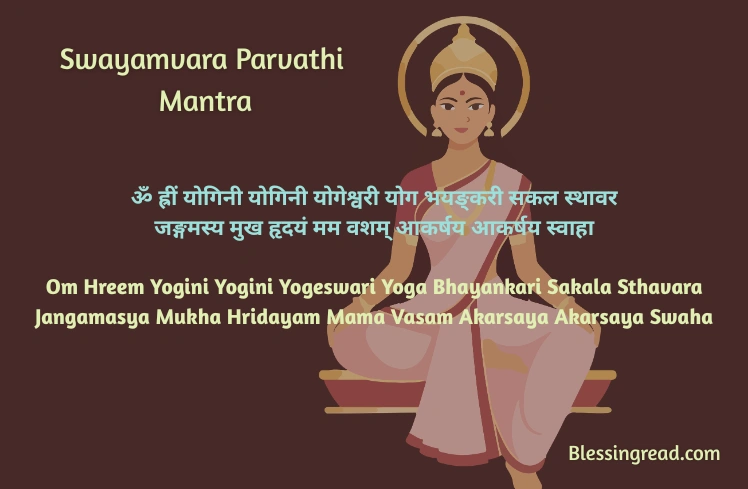
ॐ ह्रीं योगिनी योगिनी योगेश्वरी
योग भयङ्करी सकल स्थावर
जङ्गमस्य मुख हृदयं मम
वशम् आकर्षय आकर्षय स्वाहा
Transliteration
Om Hreem Yogini Yogini Yogeswari
Yoga Bhayankari Sakala Sthavara
Jangamasya Mukha Hridayam Mama
Vasam Akarsaya Akarsaya Swaha
Word-by-Word Meaning
| Sanskrit Word | Meaning |
|---|---|
| Om | The primordial sacred sound; the universal consciousness |
| Hrim | A Shakti bija (seed syllable) representing the power of the divine feminine |
| Yogini | She who is the divine feminine yogic force |
| Yogesvari | The supreme goddess and sovereign of all Yoga |
| Yoga Bhayankarı | She who is fearsome and powerful in her yogic aspect |
| Sakala Sthavara | All that is stationary and fixed in creation |
| Jangamasya | All that is moving and living in creation |
| Mukha Hridayam | The mind and heart |
| Mama | My (used to personalize the prayer) |
| Vasam | Under control or influence |
| Akarsaya Akarsaya | Draw near, attract (repeated for emphasis and power) |
| Svaha | A sacred offering word that concludes Tantric and Vedic mantras, meaning “I offer this with devotion” |
Full Meaning in Simple Language
“O Divine Mother Parvati, I invoke You through the sacred sound Hrim. You are the supreme Yogini, the sovereign of all yogic powers, and the force that pervades all that is still and all that moves in this universe. I humbly pray – draw near to me, attract towards me the one who is destined to be mine. Let their mind and heart be drawn toward me with love and purity. I offer this prayer with complete devotion.”
Swayamvara Parvathi Mantra in Regional Languages
The Swayamvara Parvathi Mantra is chanted by devotees across India in their native scripts. The sacred meaning and spiritual vibration of this mantra remain the same in every language. Below is the mantra written in five major Indian scripts for the benefit of regional devotees.
Swayamvara Parvathi Mantra in Kannada
ಓಂ ಹ್ರೀಂ ಯೋಗಿನಿ ಯೋಗಿನಿ ಯೋಗೇಶ್ವರಿ
ಯೋಗ ಭಯಂಕರಿ ಸಕಲ ಸ್ಥಾವರ
ಜಂಗಮಸ್ಯ ಮುಖ ಹೃದಯಂ ಮಮ
ವಶಂ ಆಕರ್ಷಯ ಆಕರ್ಷಯ ಸ್ವಾಹಾ
Swayamvara Parvathi Mantra in Tamil
ஓம் ஹ்ரீம் யோகினி யோகினி யோகேஸ்வரி
யோக பயங்கரி சகல ஸ்தாவர
ஜங்கமஸ்ய முக ஹ்ருதயம் மம
வசம் ஆகர்ஷய ஆகர்ஷய ஸ்வாஹா
Swayamvara Parvathi Mantra in Malayalam
ഓം ഹ്രീം യോഗിനി യോഗിനി യോഗേശ്വരി
യോഗ ഭയങ്കരി സകല സ്ഥാവര
ജംഗമസ്യ മുഖ ഹൃദയം മമ
വശം ആകര്ഷയ ആകര്ഷയ സ്വാഹാ
Swayamvara Parvathi Mantra in Telugu
ఓం హ్రీం యోగిని యోగిని యోగేశ్వరి
యోగ భయంకరి సకల స్థావర
జంగమస్య ముఖ హృదయం మామ
వశం ఆకర్షయ ఆకర్షయ స్వాహా
Swayamvara Parvathi Mantra in Hindi
ॐ ह्रीं योगिनी योगिनी योगेश्वरी
योग भयंकरी सकल स्थावर
जंगमस्य मुख हृदयं मम
वशम् आकर्षय आकर्षय स्वाहा
Swayamvara Parvathi Mantra Spiritual Explanation
The Swayamvara Parvathi Mantra is far more than a tool for attracting a partner. At its spiritual core, it is an invocation of divine love – the same love that Goddess Parvati herself demonstrated through her unwavering devotion to Lord Shiva.
Goddess Parvati as the Ideal of Sacred Love
Parvati is known in the Puranas as the goddess who chose her own path to love. She did not wait passively – she performed severe austerities, meditating for thousands of years with complete focus on Lord Shiva. Her love was selfless, devoted, and pure. When she finally won Shiva’s heart, it was not through manipulation but through the purity of her soul.
This mantra draws on that energy. When a devotee chants this Parvati Mantra for marriage, they are not asking for something harmful or manipulative. They are asking the Divine Mother to align the natural flow of love – to bring together two souls who are meant for each other with sincerity and divine grace.
The Significance of “Swayamvara”
The word Swayamvara literally means “self-choice of a groom.” It represents the right of a woman to choose her own partner with dignity, love, and free will. In the spiritual sense, this mantra invokes the blessing that love may arise freely, naturally, and with divine approval – not by force, but by divine alignment.
The Role of Bija Mantra “Hrim”
The seed syllable “Hrim” (ह्रीं) is the Shakti bija – the seed sound of the divine feminine power. When chanted with devotion, it activates the energy of the heart and creates a bridge between the devotee and the goddess. It is this bija that gives the Swayamvara Parvathi Mantra its spiritual potency.
When To Recite Swayamvara Parvathi Mantra
Chanting the Swayamvara Parvathi Mantra with correct intention and at the right time enhances its spiritual effectiveness:
Best Time to Chant:
- Early morning (Brahma Muhurta) between 4:00 AM and 6:00 AM is considered the most powerful time.
- Friday is especially auspicious as it is associated with love, beauty, and Venus – qualities aligned with Goddess Parvati.
- The shukla paksha (waxing phase of the moon), particularly on Panchami (5th lunar day), is traditionally recommended.
Auspicious Occasions:
- When seeking a suitable life partner through righteous means.
- When experiencing obstacles or delays in marriage (vivah badha).
- When praying for harmony and love within an existing relationship.
- On Hartalika Teej, Gauri Puja, and Navaratri – festivals dedicated to Goddess Parvati.
- Before beginning any marriage-related rituals or ceremonies.
Setting for Chanting:
- Sit facing east or north.
- Light a ghee lamp and offer fresh flowers – particularly red or white flowers – to an image or idol of Goddess Parvati.
- Keep your mind calm and your intention pure before beginning the chant.
How To Chant the Swayamvara Parvathi Mantra
- Take a bath and wear clean, preferably white or yellow clothing.
- Sit in a comfortable meditative posture (Sukhasana or Padmasana).
- Place an image of Goddess Parvati before you.
- Light incense and a ghee lamp as offerings.
- Offer flowers – red or white are especially appropriate.
- Calm your mind with a few deep breaths.
- Hold a rudraksha mala or crystal mala for counting.
- Chant the mantra 108 times daily.
- Maintain this practice for 21 or 41 consecutive days for a complete sadhana cycle.
- Conclude with a sincere prayer from the heart.
Number of Repetitions:
- Daily practice: 108 times (one mala).
- For a complete sadhana: 11,000 chantings over 41 days.
- Minimum sincere recitation: 21 times with full focus and devotion.
Swayamvara Parvathi Mantra Benefits
The regular and sincere chanting of this Parvati Mantra is said to bring the following spiritual and practical benefits:
For Love and Marriage:
- Removes obstacles and delays in finding a life partner.
- Attracts a suitable, compatible, and loving spouse.
- Helpful as a mantra for love marriage – seeking Goddess Parvati’s blessing for a union chosen by the heart.
- Resolves family opposition and societal hurdles when the intent behind a relationship is pure.
For Relationships:
- Strengthens emotional bonds between partners.
- Restores love and harmony in strained relationships.
- Brings mutual understanding, patience, and devotion in marriage.
Spiritual Benefits:
- Deepens the devotee’s connection with the divine feminine energy (Shakti).
- Cultivates qualities of patience, devotion, and inner grace – the same qualities exemplified by Goddess Parvati herself.
- Purifies the heart and removes ego-driven desires, replacing them with genuine love.
For the Mind and Soul:
- Brings peace of mind during periods of emotional uncertainty.
- Instills confidence and trust in divine timing.
- Creates a sense of spiritual protection under the grace of the Divine Mother.
It is important to remember that the Swayamvara Parvathi Mantra benefits are experienced most deeply by those who chant with sincerity, purity of heart, and complete surrender to the will of the Divine Mother.
Spiritual Significance of Swayamvara Parvathi Mantra in Tradition
The Swayamvara Parvathi Mantra has roots in the Shakta Tantric tradition and is considered a potent Shakti mantra. Goddess Parvati is worshipped in many forms across India – as Uma, Gauri, Durga, and Lalita – and in each form she represents the complete power of divine love and creative energy.
In South India, this mantra holds particular significance. Temples dedicated to Goddess Parvati often have special puja rituals performed with this mantra during auspicious occasions related to love and marriage. Devotees write the mantra, offer it at the altar, and pray with flowers and turmeric – ingredients traditionally associated with marriage blessings.
The mantra is also associated with the Tantric practice of Vashikarana in its purest sense – not as a tool of control, but as a prayer for the natural magnetic attraction of two souls who are divinely destined for each other. This is why it is recommended only to be used with a pure, loving intention – never with the desire to harm, manipulate, or override another person’s free will.
Conclusion
The Swayamvara Parvathi Mantra is a timeless and sacred invocation to the Divine Mother – the goddess of love, grace, and devotion. Through this mantra, devotees connect with the same energy that guided Parvati through her unwavering tapas and ultimately brought her together with Lord Shiva in a union celebrated across all the worlds.
Chanting this Parvati Mantra for marriage is not merely a ritual – it is a surrender. It is the act of placing your deepest longing in the hands of the Divine Mother and trusting that she will, in her infinite wisdom, guide the right soul toward you at the right time.
Whether you seek a life partner, wish to strengthen an existing relationship, or pray for the blessing of a love marriage, the Swayamvara Parvathi Mantra opens the door to Parvati’s compassionate grace. Chant with devotion, chant with purity, and let the sacred vibration of this mantra carry your prayer directly to the lotus feet of the Divine Mother.
May Goddess Parvati bless all sincere devotees with love, companionship, and the joy of a sacred and harmonious union.
Om Namah Shivaya. Jai Mata Parvati.
? FAQs About Swayamvara Parvathi Mantra
Q. What is the Swayamvara Parvathi Mantra?
It is a sacred Sanskrit mantra dedicated to Goddess Parvati, chanted to seek her blessings for love, marriage, and finding a suitable life partner.
Q. Who can chant the Swayamvara Parvathi Mantra?
Anyone – male or female, married or unmarried – can chant this mantra with a pure heart and sincere devotion.
Q. How many times should this mantra be chanted daily?
Chant 108 times daily using a mala. A minimum of 21 repetitions with full focus is also beneficial.
Q. What are the main Swayamvara Parvathi Mantra benefits?
It removes obstacles in marriage, attracts a compatible partner, supports love marriages, and brings harmony in relationships.
Q. Is this a mantra for love marriage?
Yes. This Parvati Mantra is widely used as a mantra for love marriage. Goddess Parvati herself chose Lord Shiva, making her the ideal deity for love-based unions.
Q. Which day is best to chant this mantra?
Friday (associated with love and beauty) and Monday (dedicated to Lord Shiva) are the most auspicious days for chanting this mantra.
 Do Not Forget To Recite These Mantras And Shlokas As Well:
- Vritrasura Stuti
- Annapurna Stotram
- Kanakadhara Stotram
- Om Vasudhare Svaha Mantra
- Om Yakshaya Kuberaya Mantra
- Maa Katyayani Mantra
- Kushmanda Devi Mantra
- Argala Stotram
- Sarva Badha Vinirmukto Mantra
- Vishwakarma Puja Mantra
- Tripura Sundari Mantra
- Vashikaran Mantra
- RAM Rameti Rameti Mantra
- Kalavati Aai Balopasana