
Introduction
Nature has always been a source of inspiration for technological innovation. Scientists have long observed how ants find the shortest routes to food, how bees coordinate complex tasks inside a hive, and how birds fly together in perfectly synchronized formations without a central leader. These remarkable behaviors demonstrate that simple individuals, when working together, can solve highly complex problems efficiently. Inspired by these natural systems, researchers developed Swarm Intelligence, a branch of artificial intelligence that focuses on collective problem-solving through the cooperation of multiple independent agents.
Today, Swarm Intelligence is becoming increasingly important in robotics, logistics, telecommunications, transportation, cybersecurity, and optimization algorithms. Instead of relying on a single powerful system, swarm-based technologies distribute decision-making across many smaller units that communicate and collaborate to achieve common goals. This decentralized approach creates systems that are more flexible, scalable, and resilient, making Swarm Intelligence one of the most promising technologies for the future of intelligent computing.
What Is Swarm Intelligence?
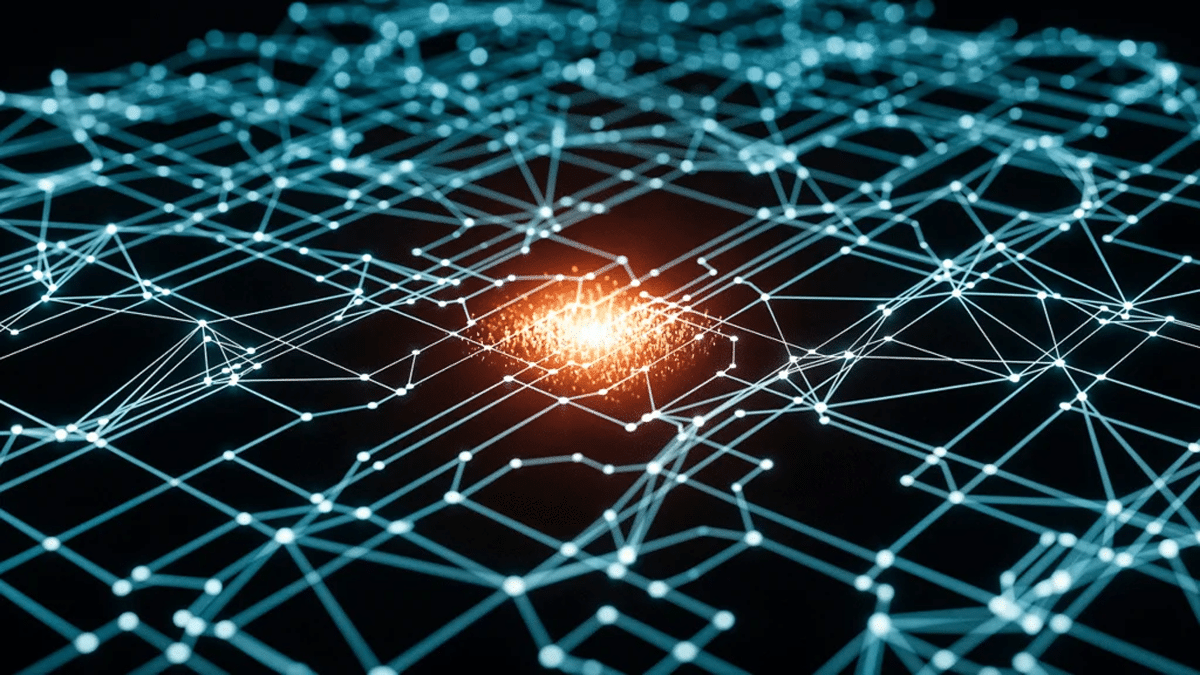
Swarm Intelligence is a field of artificial intelligence that studies how groups of simple agents can work together to perform tasks that would be difficult for an individual agent to complete alone. These agents may be software programs, robots, drones, or autonomous devices that interact with one another according to predefined rules. Although each individual agent has limited capabilities, the combined behavior of the entire swarm results in intelligent and efficient problem-solving.
Unlike traditional centralized systems where one controller manages every decision, Swarm Intelligence distributes decision-making across all participating agents. Each member continuously exchanges information with nearby agents, allowing the group to adapt quickly to changing conditions without depending on a single control point. This decentralized structure makes swarm systems highly reliable and capable of functioning even if some individual agents fail.
How Swarm Intelligence Works
Swarm Intelligence is based on cooperation, communication, and local decision-making. Every agent observes its surrounding environment, gathers information, and performs actions according to simple behavioral rules. These actions influence neighboring agents, creating a continuous feedback process that gradually produces coordinated group behavior.
Artificial Intelligence and machine learning often enhance swarm systems by enabling agents to improve their decision-making through experience. Communication technologies allow information to spread rapidly across the swarm, while optimization algorithms help identify efficient solutions to complex problems. Because every agent operates independently yet contributes to the overall objective, swarm systems remain highly adaptable even in dynamic and unpredictable environments.
Applications of Swarm Intelligence
Swarm Intelligence has practical applications across a wide range of industries. In robotics, teams of autonomous robots cooperate to perform warehouse operations, disaster response missions, agricultural monitoring, and space exploration. Instead of relying on one highly advanced robot, multiple smaller robots work together to complete tasks more efficiently while reducing operational risks.
The transportation industry uses swarm-based algorithms to optimize traffic flow, reduce congestion, and improve route planning. Airlines and logistics companies apply swarm optimization techniques to schedule deliveries, minimize fuel consumption, and manage large transportation networks more effectively.
In telecommunications, Swarm Intelligence helps optimize wireless communication networks by improving signal distribution and network performance. Cybersecurity systems use swarm-inspired algorithms to detect suspicious activities, identify cyber threats, and respond to attacks more quickly. Environmental scientists also apply swarm technologies to monitor forests, oceans, and wildlife using coordinated drone networks capable of collecting real-time environmental data across large geographical areas.
Benefits of Swarm Intelligence
One of the greatest strengths of Swarm Intelligence is its ability to solve complex problems through collaboration rather than centralized control. Because decision-making is distributed across many agents, the system remains operational even if several members fail. This fault tolerance makes swarm-based systems more reliable than many traditional computing approaches.
Swarm Intelligence also offers excellent scalability. Additional agents can be introduced into the system without requiring major architectural changes, allowing organizations to expand operations efficiently. The technology adapts naturally to changing environments, making it suitable for applications where conditions constantly evolve.
Another important advantage is cost efficiency. Instead of investing in a single sophisticated machine, organizations can deploy numerous simpler devices that cooperate intelligently. This distributed approach often reduces maintenance costs while improving overall system flexibility and performance.
Challenges and Limitations
Despite its impressive capabilities, Swarm Intelligence also presents several technical challenges. Coordinating communication among large numbers of agents requires reliable networking technologies and efficient communication protocols. If information exchange becomes delayed or inconsistent, the overall performance of the swarm may decline.
Designing behavioral rules that produce stable and predictable outcomes can also be difficult. Small changes in individual agent behavior may lead to unexpected group dynamics, requiring extensive testing and simulation before deployment. Security remains another important concern because attackers could potentially manipulate communication between agents, affecting system nổ hũ 98win.
Furthermore, large swarm systems may require significant computational resources for monitoring, optimization, and management. Researchers continue developing improved algorithms that increase efficiency while reducing processing requirements.
The Future of Swarm Intelligence
The future of Swarm Intelligence appears extremely promising as advances in Artificial Intelligence, robotics, edge computing, and next-generation communication networks continue to accelerate. Smart cities may use autonomous drone swarms to monitor traffic, inspect infrastructure, and respond to emergencies in real time. Agricultural industries may deploy robot swarms capable of planting crops, monitoring soil conditions, and harvesting produce with minimal human intervention.
Future space missions may rely on groups of autonomous robots working together to explore distant planets and construct research 98win. Healthcare organizations may utilize microscopic robotic swarms to deliver targeted medical treatments inside the human body. As AI algorithms become increasingly sophisticated, swarm systems will become even more intelligent, autonomous, and capable of solving problems that are currently beyond the reach of conventional technologies.
Conclusion
Swarm Intelligence demonstrates how simple individual agents can achieve extraordinary results through cooperation, communication, and decentralized decision-making. Inspired by the remarkable behavior of insects, birds, and other natural systems, this innovative technology is transforming industries such as robotics, logistics, transportation, cybersecurity, environmental monitoring, and telecommunications.
Although challenges involving communication, security, and system coordination remain, continuous advances in Artificial Intelligence and distributed computing are rapidly expanding the capabilities of swarm-based technologies. As organizations seek more adaptive, scalable, and resilient solutions for increasingly complex problems, Swarm Intelligence is expected to become one of the defining technologies driving the next generation of digital innovation and intelligent automation.