
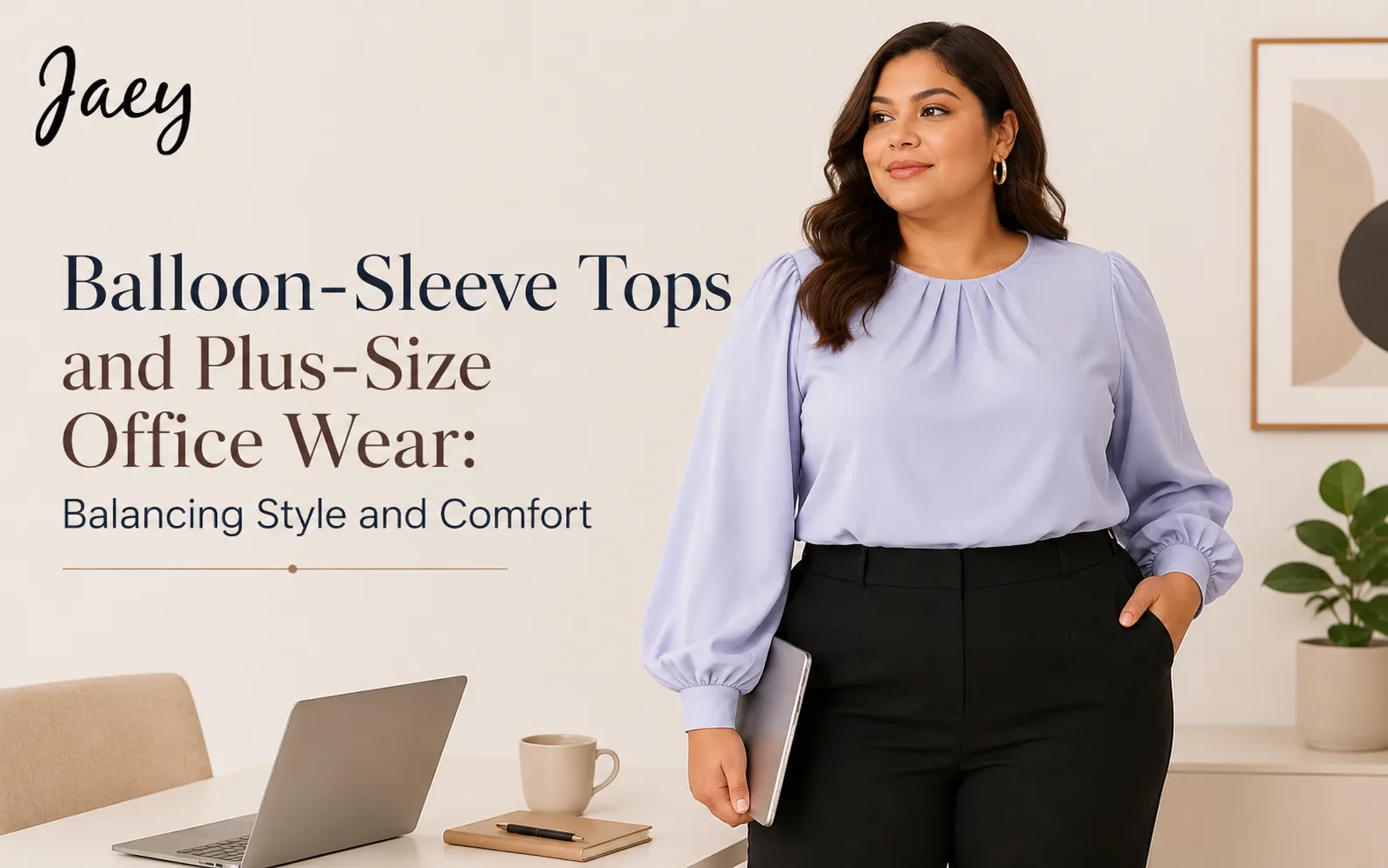
Balloon sleeves bring shape and movement to a top. They can make a plain outfit feel considered without relying on print or heavy decoration. For office wear, though, the sleeve must do more than look attractive. It needs to work at a desk, under a layer and through a commute.
The question is not whether plus-size women can wear volume. They can. The useful question is where that volume sits and how the rest of the outfit supports it.
What makes a balloon sleeve wearable
Well-designed balloon sleeve tops usually have controlled fullness between the shoulder and cuff. The cuff gives the sleeve a clear ending and prevents fabric from falling over the hands.
Check the armhole first. If it is too tight, the sleeve may pull across the upper arm and reduce movement. If it is too low, lifting the arm can raise the entire top. The ideal cut allows the sleeve to move without shifting the neckline or hem.
The cuff should feel secure but not restrictive. Elastic cuffs are flexible, though narrow elastic can leave marks after several hours. Button cuffs create a sharper finish but need enough room around the wrist.
Balance the upper and lower half
A sleeve with noticeable volume already creates a focal point. Pairing it with a cleaner bottom often gives the outfit balance. Straight trousers, tapered pants or a structured skirt can work well.
Wide trousers are also possible. The result becomes more fluid and expressive. To stop the outfit from feeling shapeless, define one area. This may be the waist, neckline or shoulder. A partial tuck can help, but it should not create uncomfortable pulling across the stomach.
There is no need to follow a rule that large bodies must avoid loose clothing. Fit is about intention. Fabric that falls cleanly looks different from fabric that collapses or clings.
Look beyond the size label
Useful plus size office wear should account for more than a wider body measurement. Bust shaping, armhole depth, shoulder width, rise and garment length all affect comfort.
Two people wearing the same size may need very different cuts. One may carry more fullness at the bust, another at the stomach or hips. Adjustable features, stretch panels and thoughtful seam placement can help, but they should not replace accurate sizing.
Measure a well-fitting garment at home and compare it with the size chart. Body measurements are useful, but garment measurements show the actual ease built into the piece. If only body measurements are provided, read the fabric and fit notes carefully.
Choose fabric for the working day
Very crisp fabric creates a dramatic balloon shape. It can also feel bulky under a blazer and may make noise during movement. Soft fabric creates a gentler sleeve but may lose its form.
Cotton blends can offer breathability and shape. Crepe can drape well and resist obvious creases. Polyester blends may be easy to maintain, though comfort varies widely with weave and weight. Judge the actual fabric rather than relying on the fibre name alone.
Hold light-coloured fabric against daylight where possible. A top that appears opaque indoors may become transparent in bright conditions. Also check whether the sleeve gathers trap heat around the elbow.
Keep office details practical
Desk work exposes design problems quickly. A very wide cuff may brush against a keyboard. Long ties can fall into food or get caught in a drawer. Large sleeve volume may not fit under a narrow blazer.
These issues do not make the design unsuitable. They simply affect where it works best. A balloon-sleeve top may be excellent for presentations, lunches and days without a jacket. A simpler sleeve may be better for travel or heavy computer work.
Neckline matters too. A clean V-neck, soft collar or restrained round neck can balance the sleeve. Large bows and heavy ruffles may create too many competing shapes, especially under office lighting.
Build repeatable combinations
Choose a top that works with at least two bottoms. A neutral sleeve top may pair with black trousers, a tonal skirt and one colour-led bottom. A coloured top may work best when the rest of the wardrobe is quiet.
Shoes should reflect the day rather than the sleeve. Loafers, low heels, clean flats and refined sneakers can all work in the right office. Comfort during the commute is part of the outfit’s success.
Accessories need not copy the round shape of the sleeve. A structured bag or clean geometric earring can provide contrast. Avoid stacking several large accessories near the face and shoulders.
Test comfort before removing the tags
Wear the full outfit for a short period at home. Sit at a table, type, bend the elbows and reach forward. Check whether the sleeve rides up, the cuff irritates the skin or the top pulls across the back.
Good office clothing should stay in place without constant correction. Balloon sleeves can bring character to plus-size workwear, but their success depends on cut, fabric and daily use. When those elements are right, the sleeve looks intentional rather than excessive.